INTRODUCTION
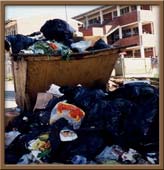 Pollution from densely populated settlements is perhaps one of
South Africa’s most important but also most complex pollution problems. Pollution from densely populated settlements is perhaps one of
South Africa’s most important but also most complex pollution problems.
Important because this pollution not only affects downstream water users, but
also has significant impacts on the people living in these settlements.
Complex because pollution from settlements is caused by the interaction of
social, political and institutional factors in our poorest communities and local
authorities.
Arguments to address this problem include;
-
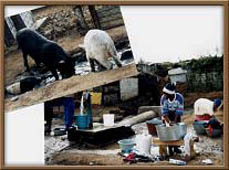 Pollution of water resources, and a lack of access to save and
reliable sanitation and water are recognized as the leading causes of death in
developing countries. Pollution of water resources, and a lack of access to save and
reliable sanitation and water are recognized as the leading causes of death in
developing countries.
- All spheres of government bear the enormous costs of treating polluted water,
and of treating diseases associated with a polluted environment.
- This problem is made even more important by the HIV/AIDS pandemic
- The increased costs of treating water taken from the river further downstream
runs to millions per year.
- Pollution and failing waste services increase the Operation and Maintenance
burden on local government, and impact on their ability to provide sustainable
services.
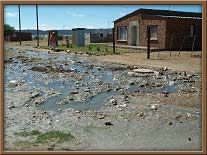 If you would like to more about the impacts of pollution from
settlements you should read Chapter 4 of the National Strategy. If you would like to more about the impacts of pollution from
settlements you should read Chapter 4 of the National Strategy.
Click here to
download the National Strategy document.
WHAT ARE THE CAUSES OF POLLUTION IN SETTLEMENTS?
Pollution in settlements is caused by the interaction of Physical, Social and
Institutional factors.
Physical factors are related to the breakdown of the services, for example the
blocking of sewers, or broken pipes and toilets. Physical problems are usually
caused by Social and Institutional Factors.
 Social factors are related to the way the community uses the
services, for example blockages may be caused by people trying to flush solid
waste down the toilet. Sometimes social problems are actually caused by
vandalism of the services. Social factors are related to the way the community uses the
services, for example blockages may be caused by people trying to flush solid
waste down the toilet. Sometimes social problems are actually caused by
vandalism of the services.
Institutional factors refer to the way the services are provided and maintained.
For example the service provider may only remove solid waste once a week, but
because of the number of people living in such a small area, twice weekly
collection may be better. Also service providers are often hesitant to work in
some areas because of vandalism and safety concerns.
Social and institutional factors interact, often making the problem worse. For
example people may not pay for services, because they think the service is poor.
The lack of payment makes it difficult for the service provider to provide a
good service.
If you would like to know more about the causes of pollution from settlements
you should read Chapter 3 of the National Strategy document.
Click here to
download the National Strategy document.
THE WASTE STREAMS
Physical, Social, and Institutional problems occur in four waste streams;
- Sewage waste
- Solid waste
- Sullage, and
- Stormwater
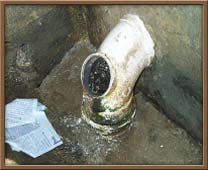
The Sewage Waste Stream
|
The Sullage Waste Stream
|
The Solid Waste Stream
|
The Stormwater Waste Stream
|
The Sewage waste stream includes failing sanitation systems. These can be any
type of sanitation system for example flush toilets, pit latrines or bucket
systems.
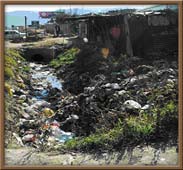
The Solid waste stream includes the services in place to remove household refuse
or street litter. This could be house to house collection, or skip systems or in
some places – where no services exist.
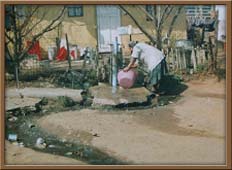
The Sullage waste stream is a problem in settlements that do not have in house
water connections, and people do their wasting at standpipes, or have to throw
cooking water and waste water into the streets.
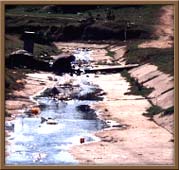
The Stormwater waste stream is the only waste stream that does not generate
waste, but this system carries waste generated in the other waste streams to the
water resources. Sometimes when stormwater systems are not maintained, flooding
of houses can cause more pollution.
HOW DO WE SOLVE THE PROBLEM?
Solving this problem requires more than just repairing the physical problems,
but means that we have to identify and solve the underlying social and
institutional problems. To do this we must identify the physical, social and
institutional problems in each waste stream.
We do this by starting with the physical problems, then asking why? For example,
why do the sewer blockages take so long to repair? This may be because the local
authority does not hear about the problem; this may be because the community has
no way of telling the local authority about the problem. Another problem may be
that the sewers block very often, this may be due to the fact that the community
flushes solid waste; this may be caused by a lack of awareness. This process is
called the Structured – Facilitated process.
The Structured-Facilitated process is done in joint workshops with the local
authority, service providers and community. This not only helps identify the
underlying causes of pollution but also helps build relationships and
understanding between the community, service providers and local authorities.
The Structured-Facilitated process has also been tested in 12 settlements across
the country. You can find out more about these test cases by clicking
here.
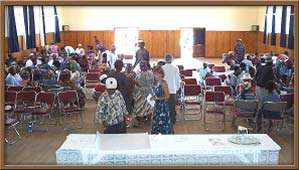
A Structured-Facilitated workshop
Click here
to find out more about the Structured-Facilitated process.
HOW WILL THE STRUCTURED-FACILITATED PROCESS BE ROLLED OUT ACROSS THE COUNTRY?
The Department of Water and Sanitation will use both proactive and
reactive support to local authorities to support the rollout of the
Structured-Facilitated approach.
Proactive rollout will be used where the regional offices of the Department have
identified significant pollution problems from settlements. The local
authorities that manage services to these settlements will be approached and
provided with all the materials as well as technical support to implement the
approaches.
However, DWAF staff will also react to requests for support from local
authorities that want to start implementing the approaches.
DWAF staff can also provide advice on how to find the financial resources to
implement the approaches. All the training materials and guidelines on how to
implement the approaches can also be downloaded by clicking here.
A more complete version of the training materials is also available on a CD-ROM,
click here
to order your free copy of the CD.
|