The structured-facilitated approach was tested in 12 test cases across
South Africa, with varying success.
In all the cases, use of the structured-facilitated approach helped the
community and local authority identify the underlying causes of pollution.
This helped them identify solutions that were not only aimed at the physical
problems and lead to more sustainable solutions aimed at the underlying social
and institutional problems.
In many cases this lead to dramatic improvements in the quality of life for
people living in the settlements.
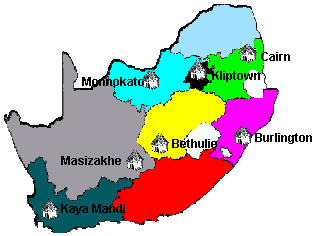
You can find out more about some of the test cases by clicking on the hut icon
next to the settlement names.
HIGHLIGHTS FROM SOME OF THE TEST CASES
|
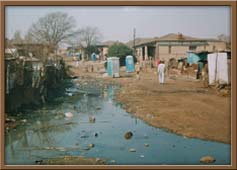
Before
|
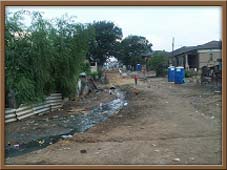
After
|
- A 50% reduction in the reported incidence of diarrhoea in Kliptown.
- Reduced flows of sullage to the river and in the streets of Kliptown when
drainage points were installed
- Increased awareness of the links between pollution and health in Kliptown and
Burlington Halt.
- Increased confidence in the local authority in Monnakato, Kliptown and
Burlington Halt.
- Increased payment for services, and a better idea of why services payment is
important in Monnakato.
- An increase of 3.3 tons of solid waste removed each month from Burlington Halt
as a result of a community run waste collection system.
- Training of community members to undertake minor repairs in Burlington Halt and
Kaya Mandi.
- Improved reporting of services failures (up from 16% to 65%) in Burlington Halt.
- The provision of an annual budget for awareness campaigns on pollution and
health in Nylstroom
- Trust funds established to help pay for services in Cairn and Burlington Halt.
- Recycling opportunities created in Cairn
- A reduced incidence of sewer blockages in Masizakhe and Bethulie.
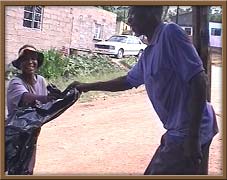
Community members handing out waste bags in Burlington Halt
Click here to
download the full report on the Test Cases
|